Renovating an Old House in Lagos? Here Is Your Complete Home Renovation Guide
Owning an older house can be a valuable investment, but living in or managing an ageing property can come with its own challenges.
The walls may look tired. The paint may have faded. The kitchen may no longer suit your lifestyle. The bathrooms may need an upgrade, the ceiling may look outdated, and the electrical or plumbing installations may require attention.
Sometimes, the house simply does not feel like the home you want anymore.
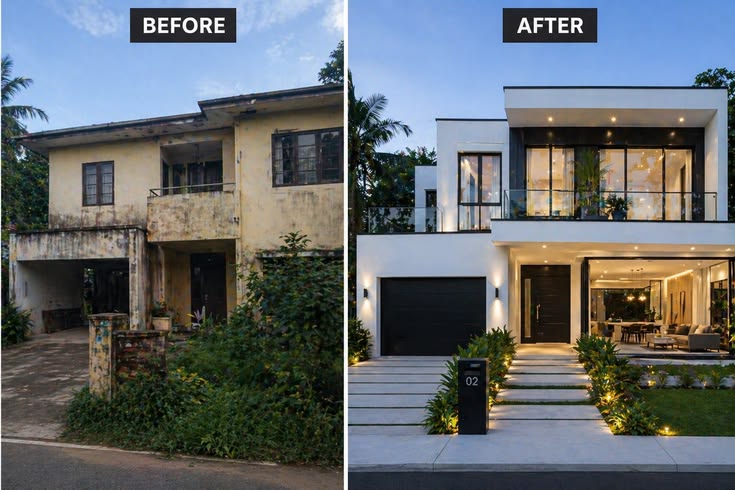
If you are considering renovating an old house in Lagos, the solution is not always to demolish everything and start again. With proper planning, inspection and professional execution, an existing property can be transformed into a modern, comfortable and functional home.
Whether your property is in Lekki, Ajah, Chevron, Sangotedo, Ikoyi, Victoria Island or another part of Lagos, this guide will help you understand what to consider before starting your renovation project.
Why Renovate an Old House?
Home renovation is more than simply changing the colour of your walls.
A well-planned renovation can improve the appearance, functionality, comfort and usability of an existing property.
Some homeowners renovate because their house looks outdated. Others have inherited an old family property and want to make it suitable for modern living. Some are preparing a property for rental, resale or short-let use.
Common reasons for renovating an old house include:
- Outdated interior finishes
- Damaged or worn-out floors
- Old ceiling designs
- Faded or peeling paint
- Poor lighting
- Inadequate storage
- Old kitchen cabinets
- Poorly designed wardrobes
- Bathroom upgrades
- Plumbing issues
- Electrical improvements
- Water damage or dampness
- Changes in family requirements
- Preparing the property for rental or resale
- Improving the overall appearance and comfort of the home
The important thing is to understand why you are renovating before deciding what to renovate.
Renovation Is Not Always the Same as Remodelling
Before starting your project, it helps to understand the difference between renovation and remodelling.
In general terms, renovation focuses on repairing, refreshing or replacing existing finishes without fundamentally changing the building’s structural arrangement.
This may include:
- Painting
- Replacing tiles
- Changing doors
- Replacing sanitary fittings
- Updating finishes
- Changing windows
- Improving ceilings
Remodelling, on the other hand, can involve changing the arrangement or design of spaces—for example, altering walls or making structural changes.
This distinction matters because larger alterations can have additional planning, structural and regulatory implications.
For properties in Lagos, LASBCA advises owners to contact the relevant building-control authorities before renovation and states that more substantial alterations, additions or redevelopment require the appropriate approvals and professional involvement.
If your renovation involves structural changes, do not treat it as simply an interior decoration project. Get the appropriate professional assessment before work begins.
Step 1: Inspect the Property Before Renovating
The first step in renovating an old house should not be buying paint.
It should be inspection.
Before deciding what the house needs, you need to understand its current condition.
Walk through the entire property and inspect:
Walls
Look for:
- Cracks
- Dampness
- Water stains
- Peeling surfaces
- Poor previous repairs
- Signs of moisture
Ceiling
Check for:
- Water stains
- Sagging
- Cracks
- Damaged POP
- Mould or dampness
- Signs of roof leakage
Floors
Look for:
- Broken tiles
- Loose tiles
- Uneven surfaces
- Stained flooring
- Damaged skirting
Doors and Windows
Check:
- Door alignment
- Locks
- Hinges
- Handles
- Window frames
- Glass
- Security features
Plumbing
Check:
- Taps
- Toilets
- Showers
- Pipes
- Drainage
- Water pressure
- Signs of leakage
Electrical System
Check:
- Socket locations
- Switches
- Light points
- Exposed wiring
- Distribution board
- Air-conditioning points
- Appliance points
An inspection helps you distinguish between what must be fixed and what would simply be nice to upgrade.
Step 2: Separate Repairs From Cosmetic Improvements
This is one of the most important things to do when renovating an old property.
Not every problem has the same level of urgency.
For example:
Essential repairs
These may include:
- Serious water leakage
- Faulty electrical installations
- Plumbing problems
- Damaged ceilings
- Significant dampness
- Structural concerns
- Damaged doors or windows
- Major drainage problems
Improvement work
These may include:
- New paint
- Wallpaper
- POP ceiling
- New lighting
- Kitchen cabinets
- Wardrobes
- Decorative wall finishes
- New tiles
- Interior styling
The priority should generally be to deal with problems that can damage the property or create safety issues before spending heavily on decorative finishes.
There is little benefit in installing an expensive new ceiling if an unresolved roof leak will damage it later.
Step 3: Decide Whether You Need a Full or Partial Renovation
You do not necessarily have to renovate the entire house at once.
There are different approaches.
Partial renovation
You may choose to renovate only selected areas, such as:
- Living room
- Kitchen
- Master bedroom
- Bathrooms
- Entrance
- Ceiling
- Exterior
This approach can be useful when your budget is limited or when only certain parts of the house require attention.
Full renovation
A full renovation may involve several areas of the property at the same time.
For example:
- Ceiling
- Electrical
- Plumbing
- Painting
- Flooring
- Kitchen
- Wardrobes
- Bathrooms
- Doors
- Lighting
- Wall finishes
A full renovation requires more planning because different stages depend on one another.
Step 4: Create a Realistic Renovation Budget
One of the biggest mistakes homeowners make is starting renovation work without knowing how much they can realistically spend.
Your renovation budget should not only cover materials.
Consider:
- Labour
- Transportation
- Installation
- Professional fees where applicable
- Electrical work
- Plumbing
- Ceiling work
- Painting
- Cabinetry
- Wardrobes
- Tiles
- Lighting
- Waste removal
- Cleaning
- Unexpected repairs
Material prices and labour costs can vary significantly, so avoid making major decisions based on an old quotation you received several years ago.
Instead, get current quotations based on the actual condition and size of your property.
Create a priority list
A useful approach is to divide your renovation into three categories:
Must do:
Work that is necessary for safety, functionality or preventing further damage.
Should do:
Work that significantly improves comfort or usability.
Nice to have:
Decorative upgrades that can be completed when the budget allows.
This makes it easier to control spending without abandoning the entire project.
Step 5: Plan Your Interior Design Before Work Begins
An old house does not need to look old after renovation.
However, modernising a property does not mean adding every trendy design you see online.
Start by deciding what you want the finished home to feel like.
You might prefer:
- Modern minimalist
- Contemporary
- Warm and elegant
- Luxury-inspired
- Simple and practical
- Classic
- Modern Nigerian residential style
Think about the colours, materials, lighting, furniture and storage before committing to individual finishes.
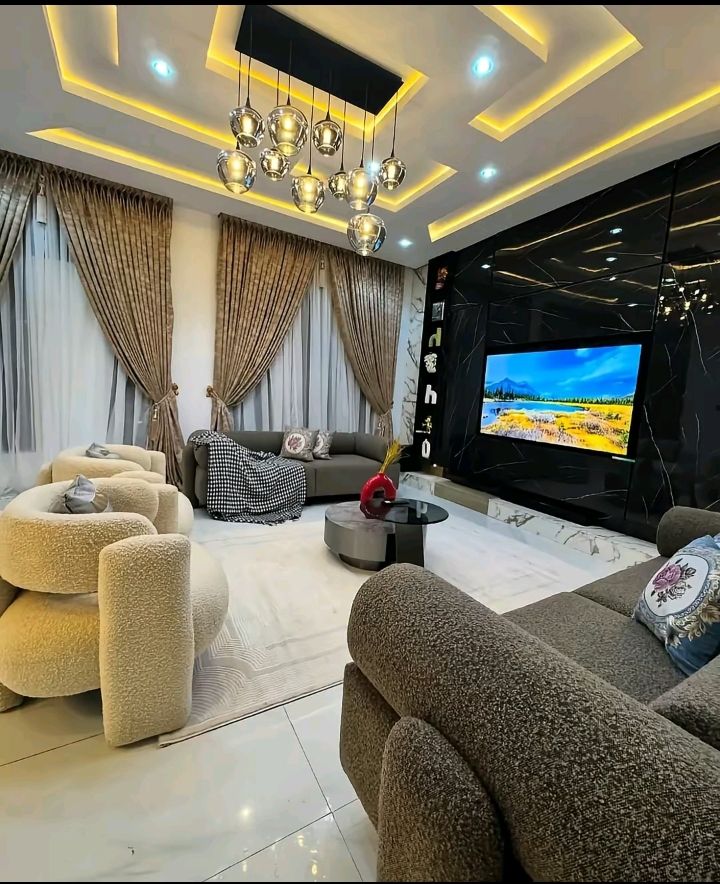
Your ceiling should complement your lighting.
Your wall colours should work with your flooring and furniture.
Your kitchen should match the overall style of the house.
Your wardrobes should provide enough storage without making the bedroom feel overcrowded.
Good renovation is about coordination.
Step 6: Upgrade the Ceiling
An outdated ceiling can make an otherwise attractive room look old.
Depending on the property and your design preference, you may consider:
- POP ceilings
- Gypsum ceilings
- Suspended ceilings
- Simple modern ceiling designs
- Recessed lighting
- Cove lighting
- Decorative ceiling details
However, before installing a new ceiling, inspect the roof and upper structure for leaks or moisture problems.
You should also coordinate ceiling work with your electrical and lighting plan.
This prevents situations where a newly completed ceiling has to be opened again to accommodate electrical changes.
Step 7: Modernise the Electrical and Lighting System
Older houses may have electrical layouts that were designed for a very different lifestyle.
Today, homeowners may need power points for:
- Televisions
- Computers
- Routers
- Phones
- Kitchen appliances
- Refrigerators
- Microwaves
- Washing machines
- Air conditioners
- Water heaters
- Home entertainment systems
Lighting should also be considered carefully.
Instead of relying on one central light in each room, you may want to combine different lighting functions.
For example:
- Main ceiling lighting
- Recessed lights
- Pendant lights
- Wall lights
- Decorative lighting
- Task lighting
- Accent lighting
Any electrical modifications should be handled appropriately and safely by qualified professionals.
Step 8: Refresh the Walls With Paint and Wall Finishes
Fresh paint is one of the simplest ways to transform an old house.
But good painting is more than applying a new colour over an existing wall.
Before painting, surfaces may need:
- Cleaning
- Scraping
- Filling
- Sanding
- Crack repair
- Priming
- Proper preparation
If there is dampness or water damage, the underlying problem should be investigated before simply covering it with paint.
Consider using feature walls
You do not have to use the same colour throughout the house.
A feature wall can add personality to:
- Living rooms
- Bedrooms
- Dining areas
- Hallways
Wallpaper and other decorative wall finishes can also be used selectively to create visual interest.
Step 9: Renovate the Kitchen
The kitchen is often one of the areas where homeowners notice the difference most after renovation.
An old kitchen may have:
- Limited storage
- Outdated cabinets
- Poor lighting
- Insufficient worktop space
- Poor appliance placement
- Damaged tiles
- Worn-out fittings
When renovating your kitchen, think beyond appearance.
Ask:
How will I actually use this kitchen every day?
Consider the position of:
- Cooker
- Refrigerator
- Sink
- Microwave
- Oven
- Storage cabinets
- Worktops
- Small appliances
The final design should make movement, cooking and storage easier.
A beautiful kitchen that is difficult to use is not a successful renovation.
Step 10: Upgrade Bedrooms With Better Storage
Bedrooms can often benefit from a well-designed fitted wardrobe.
Older properties may have limited storage or poorly designed wardrobes that waste valuable space.
A modern fitted wardrobe can provide dedicated areas for:
- Clothes
- Shoes
- Bags
- Accessories
- Bedding
- Personal items
The design should take the room’s dimensions into account.
Do not simply copy a wardrobe design from another property.
Your storage should be designed around the people who will use the room.
Step 11: Renovate the Bathrooms
Bathrooms are another area where an old property can quickly show its age.
Depending on the condition of the space, you may consider upgrading:
- Wall and floor tiles
- Shower fittings
- Toilets
- Wash-hand basins
- Mirrors
- Vanity units
- Lighting
- Storage
- Water heaters
- Accessories
Before installing new finishes, check the plumbing and drainage.
There is little value in installing expensive bathroom tiles over an unresolved plumbing problem.
Step 12: Pay Attention to Flooring and Doors
Flooring can have a major effect on the overall appearance of a renovated home.
If existing tiles are still in good condition, they may not necessarily need to be replaced.
However, damaged, outdated or badly installed flooring may need attention.
You should also inspect:
- Door frames
- Door leaves
- Handles
- Locks
- Hinges
- Skirting
- Stair finishes
Small details can make a significant difference once the renovation is complete.
Step 13: Improve the Home’s Lighting and Ambience
A renovation should not stop at walls and cabinets.
Think about how the house will feel in the morning, afternoon and evening.
Natural light should be considered alongside artificial lighting.
Curtains, blinds, mirrors, lighting and furniture placement can all affect how spacious and comfortable a room feels.
For example, strategically positioned lighting can highlight:
- Feature walls
- Artwork
- Kitchen surfaces
- Wardrobes
- Architectural details
Good lighting can make a well-designed renovation look even better.
Step 14: Do Not Renovate Everything Just Because You Can
A common mistake is assuming that an old house must be completely stripped and rebuilt internally.
That is not always necessary.
Some existing features may still be perfectly functional.
Before replacing something, ask:
Does it need to be replaced, or do I simply want something newer?
This question can help you control your renovation budget.
For example, if existing flooring is still attractive and in good condition, you may decide to invest the money elsewhere.
The objective is not to spend the most money.
The objective is to achieve the best result within your available budget.
Step 15: Plan the Order of Work
Renovation becomes much easier when the work is properly sequenced.
A general renovation workflow may look like this:
1. Property inspection
Identify defects, repairs and improvement opportunities.
2. Renovation scope
Decide exactly what will be renovated.
3. Budget and quotation
Establish the expected cost and priorities.
4. Design and material selection
Choose colours, finishes, ceilings, cabinets and other materials.
5. Repairs
Address leaks, plumbing, electrical or other essential issues.
6. Ceiling and electrical work
Complete work that needs to happen before final wall finishes.
7. Wall preparation
Prepare surfaces for painting or wallpaper.
8. Painting and wall finishes
Complete major wall finishing.
9. Kitchen and wardrobe installation
Install cabinetry and storage solutions.
10. Lighting and final fittings
Complete lights, switches and other fittings.
11. Final inspection
Identify defects and outstanding work.
12. Cleaning and styling
Prepare the property for occupation.
The exact sequence will depend on the project, but coordination is essential.
What About Renovating an Old House in Lagos?
Renovating a property in Lagos requires more than choosing attractive finishes.
Homeowners should also consider the property’s condition, the type of work being proposed and any applicable planning and building-control requirements.
LASBCA states that it is responsible for building control and renovation oversight in Lagos and advises property owners to engage relevant professionals and comply with applicable building regulations. Its guidance also notes that owners should contact the agency before renovation, alteration or demolition work.
For renovation work involving alterations, additions or redevelopment, Lagos regulations provide for appropriate documentation and, where applicable, professional structural assessment and supervision.
Do not assume that every renovation project has the same approval requirements. If your proposed work goes beyond straightforward replacement of finishes, confirm the applicable requirements before commencing work.
This is particularly important when considering structural changes, extensions, demolition or major alterations.
How Much Does It Cost to Renovate an Old House in Lagos?
There is no single price that applies to every old house renovation project.
The cost depends on the property’s:
- Size
- Location
- Existing condition
- Number of rooms
- Required repairs
- Quality of materials
- Ceiling design
- Painting requirements
- Kitchen requirements
- Wardrobe requirements
- Bathroom requirements
- Electrical work
- Plumbing work
- Labour
- Design complexity
For this reason, it is better to have the property assessed before receiving a serious renovation quotation.
A house that looks like it only needs painting may have hidden plumbing, electrical, dampness or ceiling problems.
Likewise, a property that looks very old may require less work than expected if the underlying structure and installations are still in good condition.
Should You Renovate an Old House or Buy a New One?
This depends on your circumstances.
Renovating may make sense when:
- You already own the property.
- The location is valuable to you.
- The structure is suitable for renovation.
- You like the existing layout.
- You want to modernise the interior.
- The renovation cost is reasonable compared with alternatives.
Buying or rebuilding may make more sense when:
- The property has serious structural problems.
- The existing layout is unsuitable.
- Major redevelopment is required.
- Renovation costs are likely to approach the cost of another suitable property.
This is why an assessment should come before making a major financial decision.
Common Mistakes Homeowners Make When Renovating Old Properties
1. Starting Work Without an Inspection
You may discover expensive problems after the project has already started.
2. Focusing Only on Decoration
A beautiful interior cannot compensate for unresolved leaks, plumbing or electrical problems.
3. Having No Clear Budget
Without a budget, renovation expenses can quickly become difficult to control.
4. Choosing Materials Without a Design Plan
This can result in colours and finishes that do not work well together.
5. Changing the Design Halfway Through
Constant changes can increase costs and extend the project timeline.
6. Hiring Different Artisans Without Proper Coordination
One artisan’s work may interfere with another person’s completed work.
7. Ignoring Storage
A beautiful home can quickly become cluttered when there is insufficient storage.
8. Choosing Style Over Function
Your home should look good, but it must also work for your everyday life.
9. Ignoring Regulatory Requirements
Where applicable, homeowners should establish the required approvals and professional requirements before renovation work begins. Lagos authorities specifically advise contacting LASBCA before renovation and related building works.
Old House Renovation Checklist
Before starting your project, use this checklist:
Property Assessment
- Inspect walls
- Check ceilings
- Check for leaks and dampness
- Inspect flooring
- Check doors and windows
- Inspect plumbing
- Review electrical points
- Identify structural concerns
Planning
- Define renovation goals
- Decide between partial and full renovation
- Create a realistic budget
- Prioritise essential repairs
- Choose your interior style
- Prepare a project schedule
- Confirm applicable regulatory requirements
Interior Finishing
- Ceiling
- Electrical and lighting
- Painting
- Wallpaper or feature walls
- Flooring
- Kitchen cabinets
- Wardrobes
- Bathroom fittings
- Doors and hardware
- Final fixtures
Completion
- Inspect completed work
- Correct defects
- Complete final touch-ups
- Clean the property
- Install furniture and accessories
- Carry out final walkthrough
Why Professional Renovation Planning Matters
Renovating an old house can involve many moving parts.
A homeowner may have to coordinate painters, electricians, plumbers, ceiling installers, carpenters, cabinet makers and other artisans.
Without proper coordination, a project can become stressful.
For example, painting a wall before electrical work is completed may mean the wall has to be damaged again.
Installing a new ceiling before resolving a roof leak can create another problem.
Ordering kitchen cabinets before taking accurate measurements can lead to costly adjustments.
Professional planning helps reduce these avoidable mistakes.
Let Helomia Homes Touch Help You Transform Your Old Property
An old house does not necessarily need to remain old-fashioned.
With the right assessment, planning, materials and workmanship, an existing property can be transformed into a home that feels modern, comfortable and suited to your lifestyle.
At Helomia Homes Touch, we provide interior finishing and renovation-related services for homeowners who want to improve their properties.
Our services can include:
- Interior finishing
- Home renovation
- POP ceiling installation
- Gypsum ceiling installation
- Suspended ceilings
- Interior painting
- Wallpaper installation
- Kitchen cabinets
- Fitted wardrobes
- Interior improvement
- Renovation supervision
Whether you are renovating a family home, upgrading an older property or preparing a house for a new phase of occupancy, the first step should be understanding exactly what the property needs.
Ready to Renovate Your Old House in Lagos?
Renovating an old property does not have to mean changing everything at once.
Start with a proper assessment.
Identify what needs repair. Decide what needs upgrading. Establish your budget. Plan your finishes. Then execute the work in the right order.
The difference between a stressful renovation and a well-managed renovation often comes down to planning before spending.
If you are planning to renovate or upgrade your property in Lagos, you can learn more about our Interior Finishing Services or Contact Helomia Homes Touch to discuss your project.
Your old house may not need a new beginning. It may simply need the right transformation.