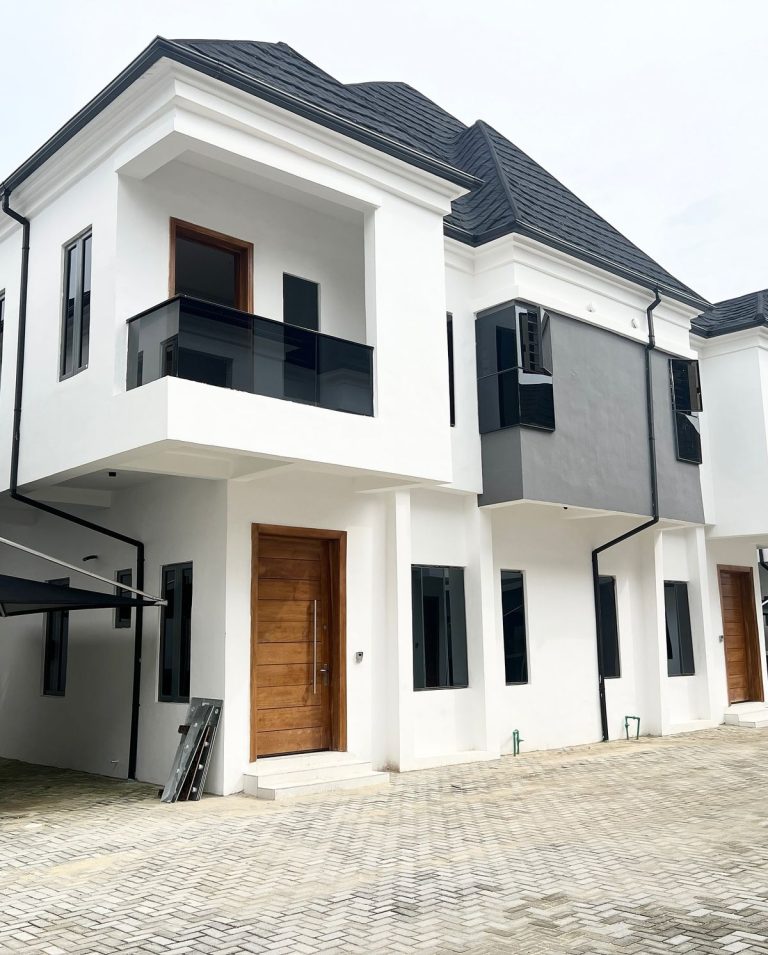
How to Avoid Costly Mistakes When Finishing Your New Home
Buying a new house is a major achievement, but turning that house into a beautiful and comfortable home requires careful planning.
Many homeowners spend a significant amount of money on interior finishing, only to discover that some decisions have created unnecessary expenses, delays or disappointing results. In some cases, work has to be removed and done again because it was started in the wrong order or without proper planning.
The good news is that most home finishing mistakes can be avoided.
Whether you have just bought a house in Lekki, Ajah, Chevron, Ikoyi, Victoria Island or another part of Lagos, having a clear plan before work begins can help you control your budget and achieve a better result.
In this guide, we will look at the most common mistakes homeowners make when finishing a new home and what you can do to avoid them.
What Are Home Finishing Mistakes?
Home finishing mistakes are planning, purchasing, design, workmanship or coordination errors that can lead to unnecessary costs, delays, poor results or repeated work during the finishing of a property.
They can happen at different stages of a project.
For example, a homeowner may:
- Start painting before ceiling work is completed
- Buy materials without taking proper measurements
- Choose designs that do not suit the size of the room
- Install electrical points in the wrong locations
- Hire contractors based only on price
- Change the design repeatedly
- Buy too many materials
- Underestimate labour costs
- Begin cabinetry before plumbing and electrical points are confirmed
- Fail to supervise the project properly
These mistakes may appear small at first, but several small mistakes can add up to a substantial amount of money.
1. Do Not Start Work Without a Clear Plan
One of the biggest mistakes is starting immediately without knowing exactly what needs to be done.
A homeowner may call a painter today, a POP installer tomorrow and a cabinet maker a few days later without having an overall plan.
This can create conflicts between different aspects of the project.
Before starting, prepare a list of the work required.
For example:
Ceiling
- POP ceiling
- Gypsum board
- Recessed lighting
- Chandelier points
- Cove lighting
Walls
- Surface preparation
- Painting
- Wallpaper
- Wall cladding
- Feature walls
Kitchen
- Cabinets
- Worktop
- Backsplash
- Sink
- Appliances
- Lighting
Bedrooms
- Wardrobes
- Lighting
- Curtains
- Wall finishing
- Flooring
Once you know what is required, you can organise the work in a logical sequence.
2. Do Not Set Your Budget Based Only on What You See Online
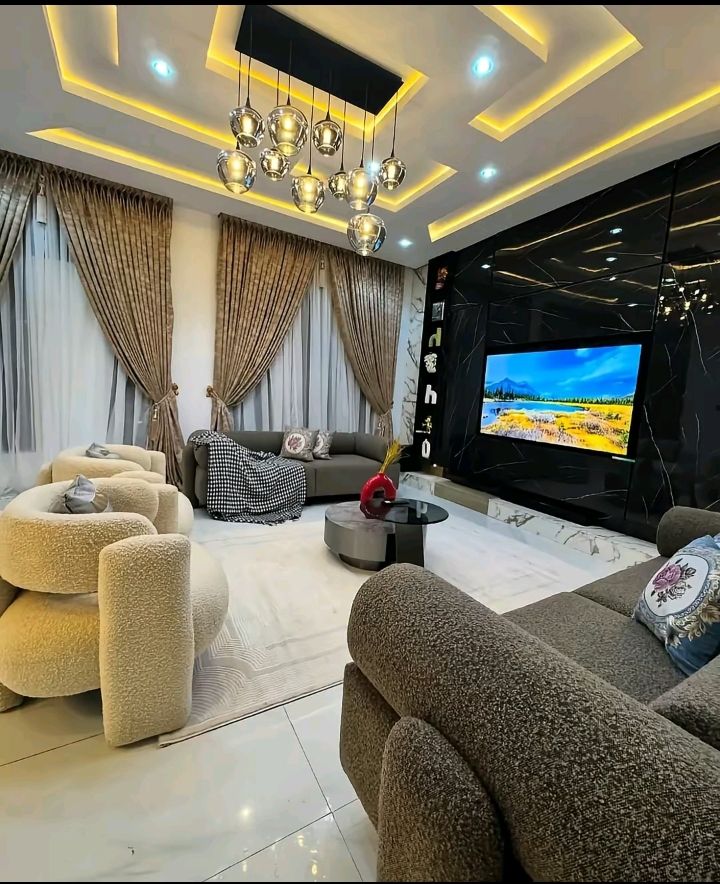
Social media has made it easy to find beautiful interior designs.
You may see a luxury living room online and decide that you want exactly the same design in your home.
The problem is that the cost of achieving that look can vary considerably depending on:
- Property size
- Materials
- Design complexity
- Labour
- Location
- Existing condition of the property
- Quality of fittings
- Customisation
- Installation requirements
Instead of copying a design and assuming it will cost a certain amount, assess your actual property first.
Your budget should be based on the work required in your house and the materials you intend to use.
3. Do Not Spend Your Entire Budget on One Area
Another common mistake is spending too much money on one room while neglecting other important areas.
For example, you could spend heavily on an elaborate living-room ceiling and luxury furniture but discover that you no longer have enough money for wardrobes, kitchen cabinets or proper lighting.
A better approach is to divide your budget into categories.
Consider allocating funds for:
- Ceiling
- Electrical work
- Lighting
- Painting
- Flooring
- Kitchen
- Wardrobes
- Bathrooms
- Wall finishes
- Curtains
- Furniture
- Labour
- Contingency
Your home should feel balanced rather than having one impressive room surrounded by unfinished spaces.
4. Always Measure Before Buying
Poor measurements are responsible for many avoidable home finishing problems.
Do not purchase a wardrobe, kitchen cabinet, curtain, television console or large piece of furniture simply because you believe it will fit.
Measure first.
Take measurements of:
- Wall length
- Ceiling height
- Door openings
- Window openings
- Available floor space
- Kitchen walls
- Wardrobe locations
- Appliance spaces
For custom cabinetry and wardrobes, accurate measurements are particularly important.
A small measurement error can affect the entire installation.
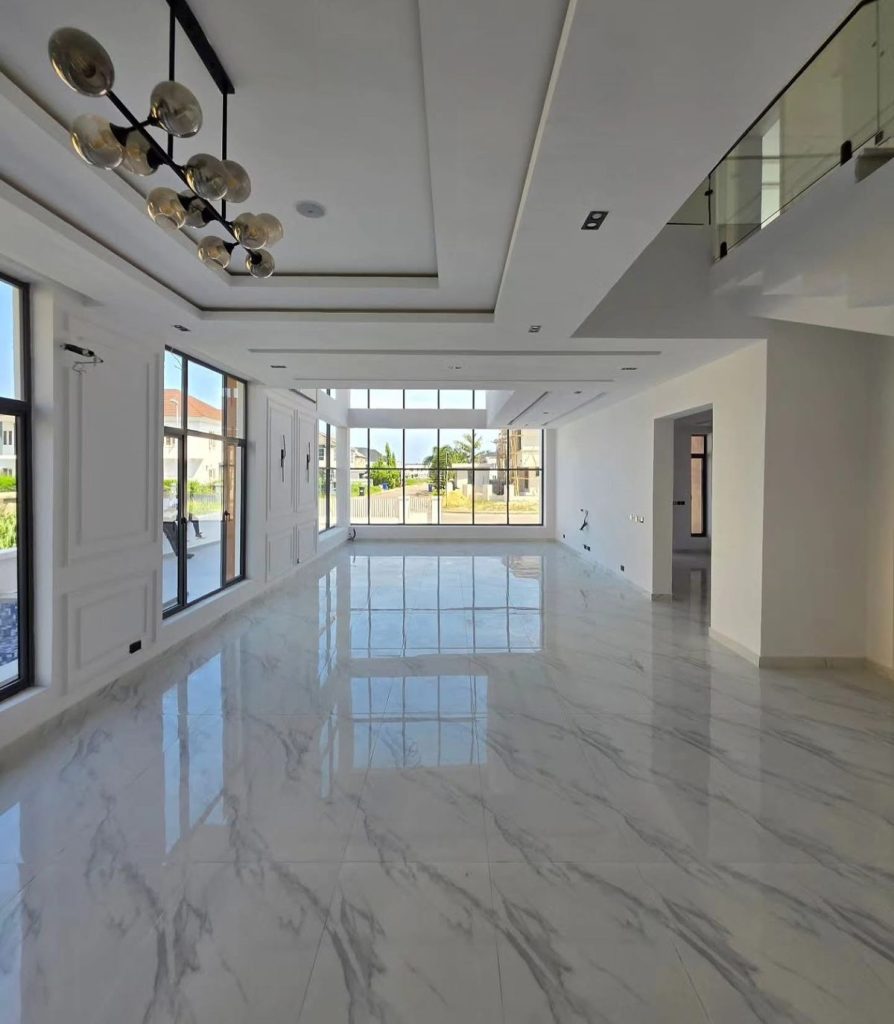
5. Do Not Choose a Ceiling Design Before Planning Your Lighting
POP and gypsum ceilings can transform an interior, but the ceiling design should work together with your lighting plan.
Before installation, determine where you want:
- Spotlights
- Chandeliers
- Pendant lights
- Wall lights
- LED strips
- Cove lighting
- Other electrical points
If you install the ceiling first and decide on lighting later, you may have to drill, cut or modify the finished ceiling.
That can result in additional labour and repair costs.
The better approach is to plan the ceiling and lighting together.
6. Do Not Paint Before Dusty Work Is Completed
This is one of the most common home finishing mistakes.
Imagine spending money on fresh interior painting and then starting extensive drilling, ceiling installation or electrical work.
Dust, tools and movement around the property can damage the newly painted surfaces.
A better sequence is generally to complete major dusty or disruptive work before final painting.
Depending on the project, this may include:
- Major repairs
- Electrical and plumbing work
- Ceiling installation
- Wall preparation
- Other major installations
- Painting
- Final decorative finishing
- Cleaning
The exact sequence may vary depending on the property, but the principle remains the same: plan the work so finished surfaces are not unnecessarily damaged by later activities.
7. Do Not Ignore Electrical Planning
Electrical work should be considered before your walls and ceilings are fully finished.
Think about where you will need:
- Television points
- Socket outlets
- Internet points
- Air-conditioning points
- Lighting
- Appliances
- Bedside sockets
- Kitchen appliances
- Home office equipment
For example, if you intend to mount your television on a feature wall, the electrical and cable points should be planned before the wall is finished.
The same applies to kitchen appliances and bedroom lighting.
Correct planning can reduce visible cables and unnecessary modifications.
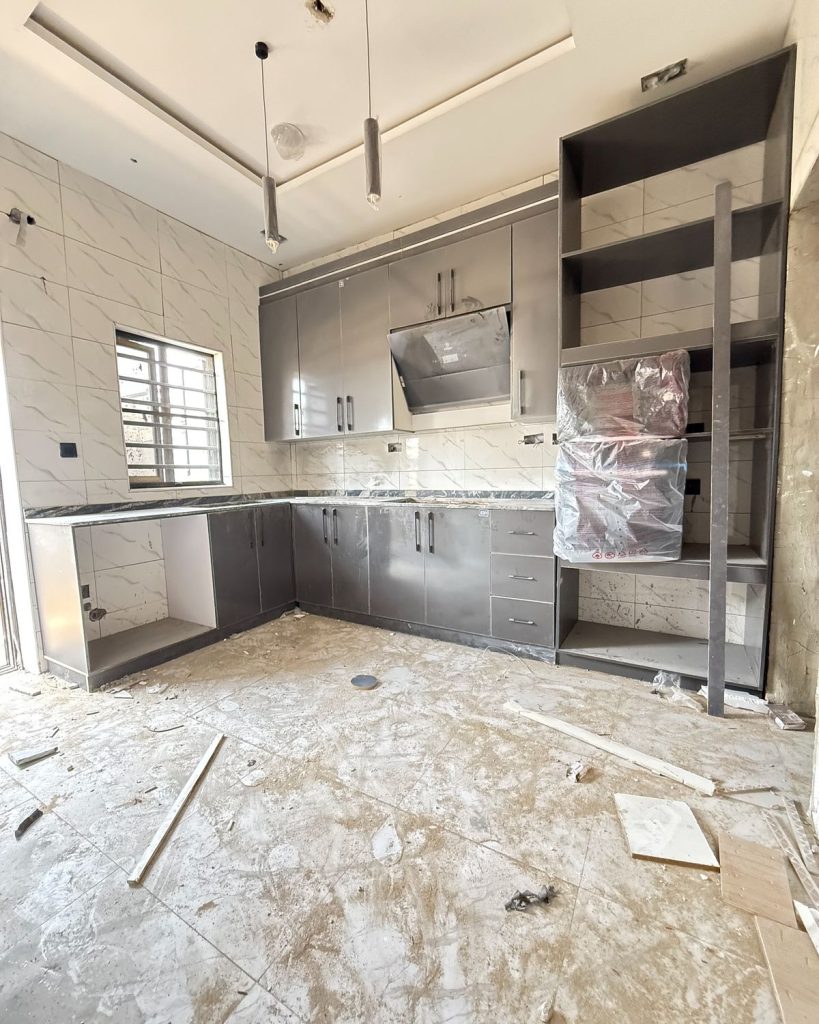
8. Do Not Buy Kitchen Cabinets Before Confirming Your Appliances
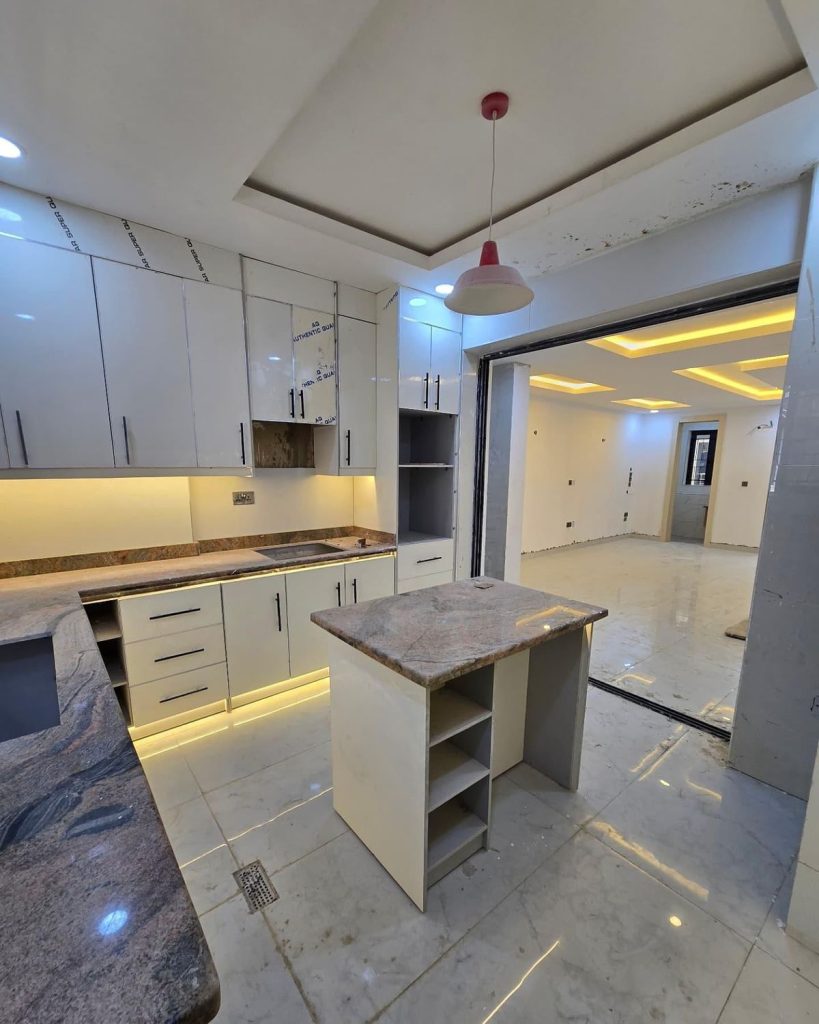
Kitchen design should take your appliances into account.
Before finalising your kitchen cabinetry, determine the locations and dimensions of major appliances such as:
- Refrigerator
- Cooker
- Oven
- Microwave
- Extractor
- Washing machine
- Dishwasher, where applicable
Also confirm plumbing and electrical positions.
Buying or designing cabinets without considering these requirements can result in an inconvenient kitchen layout.
Your kitchen should not only look good; it should also function efficiently.
9. Do Not Choose Wardrobe Designs Without Considering Storage Needs
A wardrobe can look beautiful from the outside and still be poorly designed internally.
Before ordering fitted wardrobes, think about what you actually need to store.
Do you need:
- More hanging space?
- Shelves?
- Drawers?
- Shoe storage?
- Space for bags?
- Accessories?
- Long hanging sections?
- Separate sections for different users?
The internal arrangement should reflect your lifestyle.
A good wardrobe design uses available space efficiently rather than simply filling a wall.
10. Do Not Choose Materials Based Only on Appearance
A material may look beautiful but may not necessarily be suitable for every part of your home.
When selecting materials, consider:
Appearance + durability + maintenance + functionality + budget.
For areas exposed to moisture, heat, heavy use or frequent cleaning, the material should be appropriate for the environment.
This is particularly important for:
- Kitchens
- Bathrooms
- Floors
- Worktops
- High-traffic areas
Your goal should be to create an interior that remains attractive and functional after regular use.
11. Do Not Hire the Cheapest Contractor Automatically
Price is important, but it should not be the only consideration.
A very low quotation may appear attractive until poor workmanship leads to rework.
Before hiring an artisan or contractor, consider:
- Previous projects
- Experience
- Workmanship
- Communication
- Understanding of your design
- Materials being proposed
- Project timeline
- Payment structure
- Ability to coordinate with other workers
Ask to see examples of previous work where possible.
A contractor who understands the project and communicates properly can be more valuable than someone who simply offers the lowest price.
12. Do Not Make Frequent Design Changes
Changes during a project can be expensive.
For example, you may initially decide on one ceiling design and then change it after installation has started.
You might also change:
- Paint colours
- Kitchen layouts
- Wardrobe designs
- Lighting positions
- Wall finishes
- Flooring
- Furniture arrangements
Some changes may be unavoidable, but frequent changes can increase material waste and labour costs.
Try to finalise important design decisions before work begins.
13. Do Not Buy Materials Without Confirming Quantities
Buying too little material can delay the project.
Buying too much can tie up your money and leave you with unnecessary materials.
Before purchasing significant quantities, establish:
- Required quantity
- Material specification
- Size
- Brand or quality level
- Delivery requirements
- Installation requirements
For materials that require professional measurement, allow the relevant professional to confirm quantities before making large purchases.
14. Do Not Forget Labour and Installation Costs
Some homeowners calculate the cost of materials but forget the cost of installing them.
For example, the price of a fitting, tile, cabinet or light does not necessarily represent the complete cost of having it installed.
Your project budget should account for:
- Materials
- Labour
- Transportation
- Delivery
- Installation
- Repairs
- Waste
- Additional work
Always ask for clarity about what a quotation includes.
15. Keep a Contingency Budget
Even a well-planned project can encounter unexpected issues.
You may discover:
- Damaged wiring
- Plumbing problems
- Uneven walls
- Additional repair requirements
- Material price changes
- Measurement issues
- Additional installation requirements
This is why it is sensible to keep a contingency amount instead of allocating every naira in your budget to planned work.
Having some financial room can make unexpected situations easier to manage.
16. Do Not Ignore the Existing Condition of the Property
A house may look new while still requiring attention in certain areas.
Before spending heavily on decorative finishing, check the condition of:
- Walls
- Floors
- Plumbing
- Electrical systems
- Windows
- Doors
- Bathrooms
- Kitchen connections
- Ceiling
- Water supply
There is little value in spending heavily on decoration while an underlying problem remains unresolved.
For example, fixing a water leak after completing your wall finishing could damage the work you have already paid for.
17. Avoid Trying to Do Everything at the Same Time
A home finishing project involves several moving parts.
If multiple artisans are working without proper coordination, you can experience:
- Delays
- Conflicting schedules
- Damage to completed work
- Material shortages
- Poor communication
- Confusion about responsibilities
Instead, establish a work sequence.
For example:
Inspection → Planning → Repairs → Electrical/Plumbing → Ceiling → Wall preparation → Painting → Flooring/other finishing → Cabinetry/Wardrobes → Lighting and fittings → Final cleaning
The exact sequence can change depending on the project, but coordination is essential.
18. Do Not Neglect Site Supervision
One of the most overlooked parts of interior finishing is supervision.
A homeowner may hire several workers and assume everything will happen exactly as planned.
Without proper supervision, however, issues can go unnoticed.
Regular project checks can help identify:
- Incorrect measurements
- Poor workmanship
- Wrong materials
- Unapproved changes
- Delays
- Wastage
- Incomplete work
If you are busy or live outside Lagos, arranging reliable on-ground supervision can be particularly useful.
19. Do Not Make Payments Without Keeping Records
Keep records of your project expenses.
Your records should include:
- Date
- Amount paid
- Person or company paid
- Purpose of payment
- Materials purchased
- Labour
- Additional work
- Outstanding balance
You should also keep quotations, invoices and other relevant project documentation.
Good records make it easier to monitor your actual spending against your budget.
20. Do Not Focus Only on Making the House Look Expensive
Luxury is not simply about spending more money.
A well-finished home should be:
- Functional
- Comfortable
- Practical
- Easy to maintain
- Suitable for the people living there
- Visually cohesive
A simple, well-executed interior can look significantly better than an expensive interior filled with competing designs.
Focus on quality, proportion, functionality and consistency.
21. Do Not Forget Maintenance
When choosing your interior finishes, think beyond the day you complete the project.
Ask yourself:
How easy will this be to maintain?
Consider:
- Cleaning
- Repairs
- Replacement parts
- Durability
- Exposure to moisture
- Daily usage
- Children or pets, where applicable
An interior that looks beautiful but requires excessive maintenance may become frustrating over time.
22. Avoid Copying Another Person’s House Completely
Inspiration is useful, but your home should work for you.
A design that looks excellent in a large duplex may not produce the same result in a smaller apartment.
Consider:
- Your room sizes
- Ceiling height
- Natural lighting
- Furniture
- Lifestyle
- Storage needs
- Budget
Use other homes for inspiration rather than blindly copying them.
23. Create a Priority List
If your budget is limited, you do not necessarily have to complete every decorative feature immediately.
Separate your project into:
Essential work
These are things necessary for the property to function properly.
Examples include:
- Electrical work
- Plumbing
- Repairs
- Essential lighting
- Functional kitchen
- Bathrooms
- Basic painting
Important finishing
These improve comfort and usability.
Examples include:
- Wardrobes
- Better lighting
- Kitchen upgrades
- Curtains
- Additional storage
Decorative upgrades
These can be completed when the budget allows.
Examples include:
- Feature walls
- Decorative wall treatments
- Elaborate ceiling designs
- Premium accessories
- Additional decorative elements
This approach allows you to move into a functional home without compromising your long-term vision.
A Simple Home Finishing Process to Follow
If you want to reduce unnecessary mistakes, use this basic process.
Step 1: Inspect the property
Identify what is already completed and what still needs attention.
Step 2: Define the scope
List every major finishing task.
Step 3: Set your budget
Include materials, labour and contingency.
Step 4: Develop your design direction
Choose a consistent style, colour palette and general look.
Step 5: Take measurements
Measure rooms, walls, windows, kitchen spaces and wardrobe areas.
Step 6: Plan electrical and plumbing requirements
Confirm positions before walls and ceilings are closed up.
Step 7: Schedule the work
Put the tasks in a logical order.
Step 8: Engage suitable professionals
Select contractors based on quality, experience and reliability, not price alone.
Step 9: Supervise the project
Monitor workmanship, materials, progress and expenditure.
Step 10: Conduct a final inspection
Before making final payments, inspect the completed work and identify outstanding issues.
Home Finishing Mistakes Checklist
Before starting your project, ask yourself:
☐ Have I inspected the property properly?
☐ Do I know exactly what needs to be finished?
☐ Have I established a realistic budget?
☐ Have I kept money aside for unexpected expenses?
☐ Have I measured the rooms properly?
☐ Have I planned my electrical points?
☐ Have I planned the lighting?
☐ Have I decided on the ceiling design?
☐ Have I confirmed kitchen appliance positions?
☐ Have I planned my wardrobe storage?
☐ Have I selected appropriate materials?
☐ Have I checked the contractor’s previous work?
☐ Have I agreed on the scope of work?
☐ Have I planned the work sequence?
☐ Do I have a system for supervising the project?
☐ Am I keeping records of payments and materials?
☐ Have I avoided unnecessary design changes?
☐ Have I considered long-term maintenance?
If you cannot answer several of these questions, it may be worth pausing before starting major finishing work.
Why Proper Interior Finishing Planning Matters
Interior finishing is more than choosing beautiful colours and designs.
It involves coordinating different activities, professionals, materials and decisions.
Poor planning can lead to:
- Increased costs
- Material wastage
- Delays
- Rework
- Poor workmanship
- Design inconsistencies
- Unnecessary stress
Proper planning gives you greater control over the project.
It also makes it easier to communicate your expectations to contractors and artisans.
Need Help With Interior Finishing in Lagos?
If you have recently bought a new house in Lagos and you are not sure where to start, you do not have to coordinate every part of the project alone.
Helomia Homes Touch provides interior finishing and property project coordination services for homeowners in Lagos.
Our services include:
- Interior finishing
- POP ceiling installation
- Gypsum board installation
- Painting
- Wallpaper installation
- Wall cladding
- Kitchen cabinetry
- Fitted wardrobes
- Interior renovation
- Renovation supervision
- Property project coordination
We can help you assess the work required, plan the finishing process and coordinate different aspects of your interior project.
If you are ready to discuss your project, contact Helomia Homes Touch.
You can also learn more about our interior finishing services.
Finally
Finishing a new home should be an exciting experience, not a cycle of unnecessary expenses and repeated work.
The key to avoiding costly home finishing mistakes is to plan before you spend.
Inspect the property, establish your priorities, create a realistic budget, take accurate measurements, plan your electrical and plumbing requirements, choose suitable professionals and supervise the work properly.
Most importantly, do not rush.
A properly planned interior finishing project can help you create a home that is beautiful, functional and comfortable while giving you better control over your investment.
Plan carefully. Spend wisely. Finish your home properly.